
Twenty-five dollars and a notary stamp will move a house from one name to another in Bernalillo County. That’s what it costs at the county clerk’s recording window on Silver Avenue, and plenty of people walk out of there in under an hour. The page you sign can quietly change your title insurance and your tax basis. It can also leave your mortgage exactly where it was. I’ve bought houses all over New Mexico, from the North Valley down to the mesas outside Las Cruces, and quitclaim deeds show up in a good share of the complicated files.
What Is a Quitclaim Deed and How Does It Work in New Mexico?
People ask me almost every month whether signing a quitclaim deed gets their name off the mortgage. It doesn’t. That’s the single most expensive misunderstanding in New Mexico real estate law.
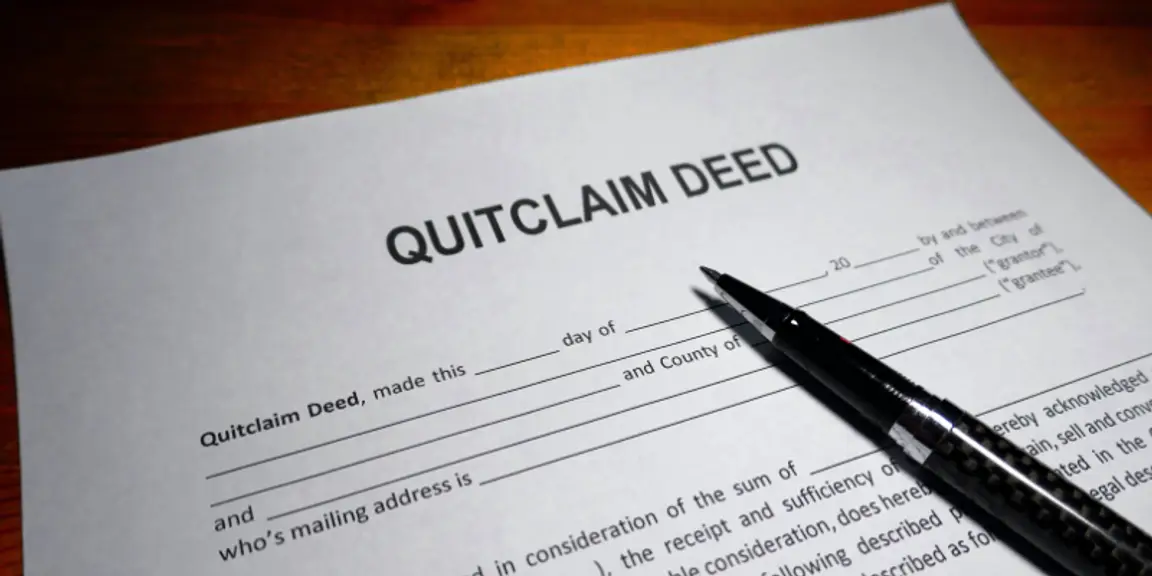
A quitclaim deed transfers whatever interest the grantor holds in the real property, and nothing more. No covenants and no promises. You get no warranties or guarantees that the title is clean, and nobody promises the grantor even owns the place. If the grantor holds a half interest, the grantee gets a half interest. When the grantor holds nothing, the grantee receives exactly that. I’ve watched grantees in that spot find out they had no claim back against the grantor for the shortfall.
Your loan is a separate contract between you and your lender. Transferring ownership doesn’t affect it, and the bank retains the right to collect from whoever signed the note. If you’d rather pay the loan off and walk away clean, here’s how to sell a house with a mortgage in New Mexico.
New Mexico keeps the mechanics simple. Under NMSA 1978, Section 14-8-4, the grantor’s signature has to be acknowledged before a notary public before the county clerk will record it. Witnesses aren’t required. You record the finished deed with the county clerk in the county where the land sits, per Section 14-9-1.
Most people treat recording as a formality, and that’s a mistake. Section 14-9-3 gives New Mexico a notice-type recording act. An unrecorded deed sitting in a kitchen drawer won’t beat a later good-faith buyer who didn’t know about it. The deed can be valid between the two of you and still lose to somebody else’s recorded interest.
If transferring ownership feels complicated, Sandia Home Buyers offers a straightforward cash offer for your New Mexico house, letting you compare a direct sale with a quitclaim deed before deciding what works best for your situation.
Quitclaim Deed Vs. Warranty Deed: What’s the Difference?
Santa Fe’s median sale price hit $574,620 in August 2026, up 3.7% from August 2025, according to Redfin. Nobody writes a check that size on a deed that guarantees nothing. I’ve watched buyers balk at exactly that gap.
That’s the practical divide. A general warranty deed carries covenants the grantee can sue on. The grantor promises good title and the right to convey it, and also promises to defend against claims that surface later. A special warranty deed limits those promises to the grantor’s own period of ownership. A quitclaim promises nothing at all. It just releases whatever interest exists.
Sellers sometimes ask me whether a quitclaim is “weaker.” I’d call it narrower. In the right situation, it’s the cleaner instrument.
Title companies notice the difference right away. A quitclaim in the chain of title won’t automatically kill a future sale. Underwriters tend to ask more questions, especially when someone without a legal background drafted the deed. That scrutiny costs time at closing, and a seller under pressure can’t spare much of it.
Here’s where the distinction bites. Say a brother quitclaims his half of a family house in Los Ranchos to his sister, and a contractor’s lien from four years ago is sitting on the property. She now owns the house and the lien. She has no warranty claim against her brother, and no title policy covers that defect unless she bought one. A title commitment costs a few hundred dollars before you sign anything, and it answers the question outright.
If you’re considering selling your house instead of dealing with deed complications, contact us for a fair cash offer. We buy houses as-is, with no pressure or obligation.
When Should You Use a Quitclaim Deed in New Mexico?

A widow in Rio Rancho called me early last year. She was three months behind on the mortgage, and the auction date was already set. Her late husband’s work truck still sat in the garage. His name was still on the title too, because nobody had told her a deed doesn’t update itself.
Often, a quitclaim deed is the wrong tool in that situation. You typically have to move a decedent’s interest through probate or another estate procedure. Quitclaims work best for transfers between people who already trust each other and already know the title history.
When a marriage ends, a decree may order one spouse to convey their interest, and the quitclaim deed carries out that order. Moving a house into a revocable living trust is another standard use. So is deeding property into an LLC you control. Parents adding an adult child, cotenants rearranging shares, and siblings consolidating an inherited interest all sit in routine quitclaim territory.
You’ll most often reach for a quitclaim just to fix a defect. Maybe a surname was misspelled, or an old mortgage got paid but was never released cleanly. Sometimes a prior owner’s spouse never gave joinder. A quitclaim from that person clears the cloud without anyone warranting anything.
Selling to a stranger is different, and I’d skip the quitclaim there. If your buyer isn’t family, use a warranty deed and a title policy, or sell to a buyer who handles the title work as part of the sale.
What Are the Benefits and Risks of a Quitclaim Deed?
Sign the wrong deed, and you can give away your house while the debt stays attached to your name. That outcome isn’t rare. It’s what happens when people treat a one-page form as a complete transaction.
The benefits are real, though. A quitclaim is fast and cheap, and it doesn’t drag the grantor into future liability for title defects. For a family moving property into a trust, that’s exactly right. There’s no escrow to open and no warranty exposure twenty years down the road.
Risks stack up on the receiving end. The grantee inherits every lien, judgment, easement, and back tax riding on the parcel. Most mortgage notes also carry a due-on-sale clause, which allows the lender to call the loan when ownership changes. Federal law, the Garn-St Germain Act, blocks that for certain family moves, like deeding the home to your child or placing it in a living trust where you remain a beneficiary. A deed to a sibling or an LLC gets no such protection. Lenders don’t always enforce the clause, and betting on their indifference is a gamble. Before anyone signs, read up on how to sell a house with a lien on it in New Mexico and what it takes to clear those debts at closing.
Have you talked to a CPA about how a gift deed affects the grantee’s tax basis? Property you give away during your lifetime, and property someone inherits at death, get treated differently. On a house held since the 1980s, that gap can be enormous, and I’ve run into it more than once buying older houses. Get real tax advice before you sign.
One more warning from experience: a deed signed under pressure, or by someone whose memory is slipping, invites a challenge later from other heirs. If an elderly owner is conveying real property to one child, bring in counsel. The hundred dollars you save drafting it yourself can turn into years of litigation among siblings.
How Do You Transfer Property Through a Quitclaim Deed in New Mexico?

For years, I figured a street address was enough to identify a property on a deed. It isn’t. A deed with only an address can be rejected at the counter or leave a cloud hanging over the property.
Start with the full legal description, copied exactly from the prior recorded deed. Lot and block, subdivision name, and plat book reference all need to match. Rural acreage out toward Edgewood or Estancia usually needs the metes and bounds. If you don’t have a copy of the old deed, pull it from the county clerk’s records.
The document then requires the grantor’s full legal name and mailing address, as well as the grantee’s full legal name. Add language stating that the grantor quitclaims their interest, and a return mailing address for the recorded original. New Mexico has a statutory short form for quitclaim conveyancing in Chapter 47 of the statutes.
Marital status matters here. New Mexico is a community property state, and state law generally requires both spouses to join in conveying community real property. A spouse’s joinder can be necessary even when only one name appears on title. Ask an attorney rather than guessing.
Get the signature notarized. Then take the original to the county clerk’s office in the county where the property is located, along with the recording fee. State law sets that fee at $25 per document, covering up to ten index entries, with an additional $25 for each additional block of ten. Bernalillo County charges that same $25, and so does every other county. Investor house buyers in Albuquerque and other New Mexico cities may help homeowners explore a cash sale when dealing with deed-related complications.
People filing these deeds often miss the next step. Under NMSA 1978, Section 7-38-12.1, whoever presents a deed transferring residential property for recording must also file a transfer declaration affidavit with the county assessor. The deadline is thirty days from the filing date with the clerk. Gifts are exempt, and so are some family transfers for nominal consideration. Your assessor’s office has the form and can tell you which category yours falls into.
How Can You Change or Nullify a Quitclaim Deed?
An heir in Belen signed her interest over to her brother on a Saturday afternoon. By Monday, she’d changed her mind. The deed had already been delivered and recorded, and that changed everything about her options.
Once a deed is delivered and accepted, the grantor can’t take it back on their own. There’s no cancellation window. The interest moved, and undoing it takes either cooperation or a lawsuit.
Cooperation is the easy path. The grantee signs a new quitclaim deed conveying the interest back, and that second deed gets notarized and recorded like the first. Both parties have to agree. A grantee who prefers to own the house has no duty to hand it over.
Typos and scrivener’s errors get fixed with a corrective deed. It restates the transfer with the right information and references the original recording number. Clerks see these constantly, and they’re cheap compared to the title headache they prevent.
Setting a deed aside over someone’s objection means going to district court. Those claims generally involve forgery, fraud, duress, undue influence, or a grantor who lacked the capacity to understand the document. The cases turn on the evidence, and the burden rests with whoever attacks the deed. In every file I’ve seen go this route, the legal fees dwarfed what a proper deed would’ve cost in the first place.
Deeds held in escrow and never delivered sit in a different category. Anyone in that spot should speak with counsel before anything is recorded.
Is a Quitclaim Deed Right for Your New Mexico Property Transfer?
![Steps to File a Quitclaim Deed in New Mexico]](https://image-cdn.carrot.com/uploads/sites/67549/2026/10/Steps-to-File-a-Quitclaim-Deed.png)
If the person receiving this house is someone you’d lend your truck to without thinking twice, a quitclaim is probably fine. If not, you want warranties and a title policy.
That’s the honest test, and it cuts through most of the confusion. Quitclaim deeds work between people who share knowledge of the property. They break down between strangers with opposing interests.
In September 2026, the median sale price for a detached home in Greater Albuquerque was $389,945, up 1.3% year over year, per Southwest MLS figures. Sold homes spent a median of 20 days on the market. A homeowner with equity who’s just tired of the house doesn’t need a quitclaim workaround. They need a clean sale. If that’s you, a cash-for-houses company in New Mexico can buy the house as-is, with no repairs or showings.
Condition and timeline change the math. A house with a failed roof and a dated kitchen doesn’t fit the retail path, especially when the seller can’t carry two mortgages. Cash home buyers in Las Cruces and the surrounding New Mexico cities may offer a practical option for homeowners who want to sell as-is without paying for repairs or waiting for showings. In those transactions, the buyer usually handles deed preparation and recording, and nobody has to stand in line at the clerk’s office.
Ask yourself whether the quitclaim deed solves an ownership question or just dodges a conversation you’d rather not have. Deeds settle title. They don’t resolve family disputes, and they’re a poor substitute for an estate plan prepared by an attorney who knows New Mexico real estate law. If the house came to you through an estate, sort out probate first. A quitclaim can’t transfer an interest you don’t yet legally hold.
Frequently Asked Questions
What Exactly Is a Quitclaim Deed Under New Mexico Law?
It’s a conveyance that passes whatever ownership interest the grantor holds to the grantee, with no warranties attached and no promise that the title is clear. New Mexico treats it as a valid instrument for transferring real property, provided it’s properly executed, delivered, and accepted. It doesn’t promise the grantor actually owns anything. If the interest turns out to be zero, the grantee receives zero and has no claim against the grantor.
Does a Quitclaim Deed Remove My Name From the Mortgage?
No. The deed and the loan are separate contracts. Signing away your interest in the property leaves your name on the note, and the lender can still come after you if payments stop. You get off a mortgage by refinancing it into the remaining owner’s name, obtaining a formal assumption from the servicer, or paying the loan off in full.
What Does It Cost to Record a Deed in New Mexico?
Every county clerk charges the statutory recording fee for a standard deed. A deed with more than ten index entries pays another fee for each extra block of ten. New Mexico has no state real estate transfer tax, so the recording fee plus whatever a notary charges is usually your whole out-of-pocket cost.
Will a Quitclaim Deed Change My Property Taxes?
It can. New Mexico caps annual valuation increases on residential property at 3%, and that cap drops away the year after a change of ownership. A house that’s been in the family for twenty years at a low assessed value can jump sharply after a transfer. Some transfers don’t count as a change of ownership. That covers one between a married couple, one into a revocable trust, or one to the owner’s child who lives in the home as their main residence. Ask the county assessor’s office before you record, not after the bill arrives.
If a deed transfer is something you’re considering because the house itself has become the problem (the repairs, the tenant, the distance), it’s worth checking what a straight sale looks like before you move title around. Sandia Home Buyers buys houses across New Mexico in as-is condition, and a conversation costs you nothing. Reach out to us at (505) 596-4747 whenever you want numbers to compare against, and if a quitclaim still makes more sense for your situation, at least you’ll have made the call with both options in front of you.
Helpful New Mexico Blog Articles
- Can You Sell A House With A Mortgage In New Mexico
- Selling a House with a Lien in New Mexico
- Can You Sell A House In Foreclosure In New Mexico?
- How to Sell Your House Without a Realtor in New Mexico
- How Long Does It Take to Sell a House in New Mexico
- How to Do a Quitclaim Deed on a House in New Mexico