
Most people sitting across the kitchen table from me ask the same first question: “I still owe money on this place. Can I even sell it?” Yes, absolutely. A mortgage doesn’t lock you in; it just adds a few moving parts to understand before you list, price, or sign anything. Your lender is paid off automatically at closing from your sale proceeds, and whatever’s left is yours. Below, we’ll walk through what it takes to sell a house with a mortgage in New Mexico, what it costs, and what your options look like.
Selling a House With a Mortgage in New Mexico: How It Works
Sit with me for a second and picture this: your mortgage is just a lien against the property title. When your home sells, the title company pays off your lender first, from your proceeds, before a single dollar comes to you. The payoff happens automatically at closing, so you don’t wire money to your bank or arrange some side deal. The escrow process handles it. What you walk away with is whatever is left over after the loan is paid, fees are deducted, and everyone else gets their cut.
A couple of weeks ago, I spoke with the Reeves family over in Rio Rancho. They had just moved their dad into an assisted living facility and inherited the responsibility of his home, a three-bedroom on the west mesa with a covered patio and a garage packed full of lawn equipment he’d collected over twenty years. There was still a mortgage on the place, and the family was convinced they couldn’t sell until it was paid off. We cleared that up fast. We closed in under a month; the lender was paid directly through title, and the family split the remaining proceeds without a single trip to a bank branch. That is the same process we follow whenever we buy houses in Rio Rancho that still have a loan on them.
The process works the same whether your remaining balance is small or you owe close to what the home is worth. Your lender will provide a payoff statement, which is a number that includes your principal balance plus any accrued interest through an estimated closing date. This number is what gets satisfied. If your home sells for more than that amount, you profit. If it sells for less, you’re dealing with what’s called a short sale, which is a different conversation.
One thing sellers consistently miss: the payoff amount your lender quotes is usually only valid for 10 to 30 days, so request it close to your actual closing date rather than the day you list. If your closing is delayed, you’ll need a new statement. Some servicers charge $25 to $50 per request, so ask upfront. If you’ve made a payment since requesting your statement, confirm with your servicer whether it’s reflected, so a discrepancy doesn’t surface at the closing table.
The title company makes sure every lien is satisfied before the deed transfers: your primary mortgage, but also a second mortgage, HELOC, mechanic’s liens, or HOA liens if you’re behind on dues. New Mexico has active HOA communities throughout the Albuquerque metro, Rio Rancho, and Santa Fe, so get a current account statement early if you’re in one. If your property has a lien that could affect the sale, check out our guide on selling a house with a lien in New Mexico to understand your options.
New Mexico Real Estate Market Trends
New Mexico has no transfer tax. Most sellers who move here from other states are genuinely surprised when they find out. States like Washington and Delaware have real estate transfer taxes that can add thousands to a transaction. Here, that line item simply doesn’t exist, and that affects your net proceeds calculation.
As of July 2026, the median sale price across New Mexico sat at $354,251, reflecting a 0.6% gain compared to the same period a year earlier. Price growth has flattened out, but homeowners who bought even five or six years ago are still sitting on genuine equity right now.

Homes were spending a median of 55 days on the market, up six days compared to a year prior. That shift matters. A few years back, sellers got spoiled by offers in 48 hours and waived inspections. That era is over. Buyers today have more time, more choices, and more leverage than they’ve had in years. When days on market stretch out, sellers who need to move on a specific timeline feel that pressure acutely. A home that’s been sitting for 90 days without a serious offer forces a decision: reduce the price, make concessions, or pull the listing and regroup.
In the Albuquerque metro specifically, the median sale price sat at $355,000 over the last tracked quarter, up 2.8% year over year, with homes averaging about 34 days on market before going under contract. The East Mountains, Corrales, and neighborhoods like Nob Hill and North Valley are still seeing solid demand from buyers who want character and proximity to the Sandia Mountains. Rio Rancho continues to attract first-time buyers priced out of the city. Santa Fe operates in its own universe.
Santa Fe’s average home value runs around $589,611, up just 0.3% over the past year, held up largely by limited supply and sustained second-home demand. The city’s strict building codes and historic preservation requirements limit new construction in ways that keep supply tight even when demand softens slightly. This dynamic protects values in Santa Fe in ways that don’t apply elsewhere in the state. Las Cruces, Taos, and Farmington each have their own rhythms. Pricing a home based on statewide averages without accounting for your specific neighborhood is one of the fastest ways to leave money on the table, or worse, overprice and sit.
Inventory is improving, giving buyers more options than they had during the pandemic years, and elevated mortgage rates have made buyers more sensitive to monthly payment math than to sticker price. That’s why a seller who offers a rate buydown often attracts more interest than one who simply drops the asking price by the same amount. Sellers who price right and prepare honestly are still closing sales; the ones calling me three months later are the ones who overpriced, hoping a desperate buyer would appear.
How Much Equity Do You Have? Numbers to Know Before Selling Your New Mexico Home
“I don’t want to do a bunch of math before I even know if I’m selling.” Fair. But the sellers who skip this step are the ones who get surprised at the closing table, sometimes unpleasantly.
You need four numbers to know where you stand:
- Your payoff amount: not your monthly statement balance. Call the loan servicer and ask for a formal payoff quote.
- A realistic estimate of your home’s current value: not what an online home value tool says, but what comparable sales in your specific neighborhood support.
- Your expected selling costs: commissions, closing costs, taxes, and any negotiated concessions.
- Any money you plan to spend on repairs or prep before listing.
Run those four numbers, and you’ll know whether you come out ahead, break even, or need a different plan.
A home valuation from a licensed appraiser gives you the most defensible number, though a good listing agent will pull comparable MLS sales for free. Use real closed sales, not list prices; automated online home value estimators can be off by 5–10% in either direction, especially in markets like Taos or Española where comparable sales are sparse.
Sellers dramatically underestimate what they still owe. If you’ve been on auto-pay for years, pull your actual payoff number today: a 30-year mortgage taken eight years ago still has roughly 22 years of principal remaining since amortization front-loads the lender’s cut in the early years. And every month your home sits listed is another month of mortgage, insurance, and utilities on a property you’re trying to leave; at $1,800 a month, three months on the market plus a 45-day close adds up to roughly $8,100 in carrying costs on top of everything else.
How Much Does It Cost to Sell a House in New Mexico
A seller owed $180,000 on a house worth around $310,000. On paper, she had $130,000 in equity. By the time she added up what selling actually cost, that number was closer to $103,000.
The gap is real, and it catches people off guard. The average seller here pays around 2.74% of the final sale price in closing costs, and that’s before agent commissions, which average another 5.82%. Combine those two figures, and you’re already at roughly 8.5% off the top, and that’s before your mortgage payoff comes out.
Your property taxes are prorated through the closing date, so you’ll owe a portion of the year’s taxes at settlement; the escrow company collects it, and any refund from your existing escrow account takes four to six weeks to arrive, so don’t count on it for your moving budget. Owner’s title insurance is customarily the buyer’s expense in New Mexico, and escrow and settlement fees are usually split between the two sides. Some older loans carry a prepayment penalty, capped at around 2% of the balance, so it’s worth a quick call to your servicer before you commit to a closing date.
Here’s how those pieces typically stack up on a New Mexico sale:
| Cost Item | Typical Amount |
|---|---|
| Agent commissions | ~5.82% of the sale price |
| Closing costs | ~2.74% of the sale price |
| Property taxes (prorated) | ~0.63% rate; ~$1,776/year median |
| Owner’s title insurance (customarily the buyer’s) | $1,200+ |
| Escrow and settlement fees | $500–$1,000 |
| Mortgage prepayment penalty (if any) | Up to ~2% of the remaining balance |
If you’ve lived in the home as your primary residence for at least two of the last five years, the IRS exempts up to $250,000 of gain for single filers and up to $500,000 for married couples, so most New Mexico homeowners selling a primary residence won’t owe federal capital gains tax. Investors and second-property owners are in a different position and should consult a tax professional, as New Mexico taxes capital gains as ordinary income at rates up to 5.9%, though the state allows a deduction of the greater of $1,000 or 40% of net capital gain income, which lowers the effective rate.
What Are Realtor Fees in New Mexico?
For years, I assumed the commission split between the listing agent and the buyer’s agent was fixed at 3% each and completely non-negotiable. That was wrong, and the real estate industry has since made it officially more flexible.
Average realtor fees in New Mexico run about 5.82% total, split roughly evenly between the listing agent at 2.90% and the buyer’s agent at 2.92%. On a $355,000 home, that’s over $20,000 out of your proceeds. It’s the single largest line item in a traditional sale by a wide margin.
Since the NAR commission-structure settlement, buyer’s agents negotiate their fee directly with the buyer, and it’s no longer automatic that sellers offer buyer’s agent compensation. In competitive submarkets like the Northeast Heights or Corrales, though, most sellers still do, since it keeps their listing accessible to buyers working with agents.
Your listing agent’s commission is negotiable. Discount brokerages, flat-fee MLS listings, and FSBO routes all reduce what you pay, at the cost of your own time and contract-handling risk. New Mexico requires a Seller’s Property Disclosure Statement covering the property’s condition; getting it wrong, through omission or inaccuracy, creates legal exposure that can erase whatever you saved on commission.
Home Repair and Staging Costs Before Selling in New Mexico
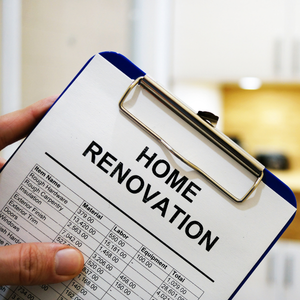
A seller in the South Valley came to me after spending four months and money she didn’t have on renovations her agent told her were “necessary”: new flooring, fresh paint, and a bathroom gut job. She listed, got low offers, and ended up accepting a price that barely covered what she’d spent improving the place.
The problem wasn’t the repairs themselves. It was the assumption that every dollar put into a home comes back at sale. Some projects clear that bar and most don’t. A minor kitchen remodel recovers about 113% of its cost at resale, while a major overhaul often returns less than 60 cents on the dollar. What actually moves the needle: curb appeal, cleanliness, and functioning systems. A home with a new roof and a freshly mowed yard often outperforms a heavily renovated one with deferred maintenance on the mechanicals.
Home inspection costs range from around $450 to $500 in New Mexico. A pre-listing inspection lets you fix, price for, or disclose issues before a buyer’s inspector finds them, rather than getting blindsided mid-contract. Staging runs between $1,500 and $3,500 for a typical home and can reduce days on market, though virtual staging is a cheaper option for vacant homes.
How a Mortgage Payoff Works at Closing in New Mexico
Selling with a mortgage in New Mexico isn’t just legal; it’s the norm, and the overwhelming majority of home sales here involve a mortgage payoff at closing. What we haven’t covered yet is the order in which the money actually moves on closing day.
Once you go under contract, your title company or closing attorney orders a payoff statement from your lender. At closing, the buyer’s funds are disbursed in a set order: your lender is paid first, then any remaining liens, then the real estate agents, and finally other closing costs. Whatever’s left is your net proceeds, delivered via wire or check. New Mexico title insurance is overseen by the state Office of Superintendent of Insurance, which sets the promulgated rates and forms, and the buyer, not the seller, typically covers title insurance here.
If you owe more than your home is worth, you’re looking at a short sale, which needs lender approval and takes longer. And any second mortgage, HELOC, or judgment lien on the property gets paid at closing before you see a dollar, so it’s worth knowing what’s on your title before your buyer’s offer expires.
What Cash Buyers Will Pay for Your New Mexico Home
A cash offer on an Albuquerque home is typically 70% to 85% of market value, and pricing yourself out of that range is a mistake that costs sellers time and money.
Cash buyers, including real estate investors and local homebuying companies, typically offer below full retail market value. That’s the trade-off for speed, certainty, and not having to prep, list, negotiate, or wait on financing approval. Take your expected retail price, subtract commissions (5.82%), closing costs (2.74%), any needed repairs, and carrying costs for however long you’d be holding the property. While listed, 2 to 3 months of mortgage, insurance, and utilities alone run $4,000 to $6,000. That’s your actual net from a traditional sale, and a fair cash offer is often closer to it than sellers expect.
Cash buyers don’t need appraisals, don’t have financing contingencies, and don’t back out when a lender gets cold feet. For sellers dealing with a distressed property, a probate sale, or a divorce, that certainty can be worth more than the highest possible retail price.
How to Sell Your House Fast in New Mexico
How long will your home actually take to sell? The average New Mexico home value is $321,186, and a well-priced listing can go under contract in about three weeks under normal market conditions. But that’s an average, and averages hide a lot. A dated property in a slower submarket can sit for months. A well-priced home in a strong Albuquerque neighborhood can go under contract in a week (sometimes before the first open house).
Speed in a traditional listing comes down to price, condition, and marketing. Overprice by even 5% and you start accumulating days on market; once your DOM count climbs past 30 or 45, buyers start wondering what’s wrong, even if nothing is, and that perception problem is hard to reverse. Professional photography and pricing accurately from day one are non-negotiable if speed matters, since buyers filter out stale-looking or overpriced listings before they ever see the property in person.
If your timeline is the priority over maximizing price, selling directly to a local cash buyer is the fastest route available: no repairs, no open houses, no waiting for a buyer’s lender to approve a loan. If you want to sell your house fast in Albuquerque, New Mexico, a direct cash sale is typically the quickest path from first contact to closed sale.
Alternatives to a Traditional Home Sale in New Mexico
A traditional listing is not always the right answer, and the real estate industry doesn’t like admitting that.
Homeowners who skip the traditional sale route and work with direct buyers, cash home buyers, or local cash investors sacrifice some price but gain time, certainty, and simplicity. For a homeowner in the middle of a relocation, a health crisis, or a financial squeeze, that’s not small; it’s the whole point.
The process with a local homebuyer is typically straightforward: they assess the property without usually requiring a formal appraisal or inspection, make an offer, and let you pick a closing date that works for you. No cleaning, no staging, no three-month listing agreement. Sandia Home Buyers is a company that buys houses for cash in New Mexico and has worked through exactly these situations with sellers across the state. Sellers who’ve gone this route successfully understood their actual net from a traditional sale first; the ones who feel burned are usually the ones comparing a cash offer to a fantasy retail price instead.
New Mexico’s foreclosure rate provides some context for why speed matters for a portion of sellers: roughly 1 in every 800 New Mexico homes saw a foreclosure filing in the first half of 2026. A foreclosure can affect your ability to qualify for a new mortgage for up to 7 years, so selling quickly before the process completes preserves both your credit and whatever equity you have left. Our guide on selling a house in foreclosure in New Mexico explains how selling before foreclosure may help protect your equity.
How to Decide the Best Way to Sell Your New Mexico Home
Listing, negotiating, surviving inspection, and waiting on the lender’s underwriting takes time even when everything goes smoothly. Add a buyer whose financing falls through at the 11th hour, and you’re back at 0, having lost 45 or 60 days you can’t get back. That’s not a reason to panic; it’s a reason to understand your options before committing to one path.
Minh Tran came to us with a townhome in Los Lunas that he needed to sell as part of a divorce settlement. He didn’t want showings, didn’t want to negotiate with strangers, and didn’t want to wait four months for a traditional sale. We made an offer that week and handled the title work, and he had his proceeds in time for his next chapter. No drama. Sellers who go looking for cash home buyers in Los Lunas usually arrive with a deadline just like his.
If a traditional sale is right for you, list with a local agent, price it honestly from day one, and use the MLS for exposure. If speed and simplicity matter more, reach out to a local direct buyer. Both paths end the same way: mortgage paid off, you move on. The difference is how much time and energy it takes to get there. For a no-obligation conversation about what your home is worth, Sandia Home Buyers is a good place to start.
Frequently Asked Questions
What Happens If You Sell a House While You Have a Mortgage?
Your mortgage doesn’t disappear when you sign a contract; it gets paid off at closing from your sale proceeds. The title company handles this automatically. Your lender provides a payoff statement with the exact amount owed through the closing date. That sum gets satisfied before anything else, and you receive whatever equity remains after all costs are deducted.
Who Pays Closing Costs in New Mexico?
Both parties pay some closing costs, but sellers typically carry the larger share. As a seller, you’re responsible for prorated property taxes, any escrow and settlement fees, and usually agent commissions. Your mortgage payoff also comes out of your proceeds at closing. Buyers cover their own loan origination fees, the home appraisal, and related lender costs. Some of these expenses are negotiable depending on market conditions and how motivated each party is.
What Is the Hardest Month to Sell a House?
January is historically the slowest month for home sales across New Mexico. Fewer buyers are actively shopping, holiday disruptions slow decision-making, and cold weather in northern parts of the state reduces foot traffic at showings. That said, serious buyers who search in January tend to be highly motivated, so listing in the winter isn’t necessarily a bad strategy if your property shows well and is priced right.
How Do You Sell a House Without a Realtor in New Mexico?
Selling by owner (FSBO) means handling pricing, marketing, showings, and contract management yourself. Most FSBO sellers use a flat-fee MLS service so buyer’s agents can find the listing, and you’ll still need a title company to handle closing. The main risks are underpricing, overpricing, or mishandling paperwork, any of which can cost more than the commission you saved.
Whether you still owe on your mortgage, need to sell fast, or just want to know your options, get a free, no-obligation cash offer: no repairs, no showings, no pressure. Contact us anytime for a straight conversation with someone who knows New Mexico real estate.